We spent eight days in Corsica, travelling from the northern port of Bastia to the southern port of Bonifacio. Here are some reflections.
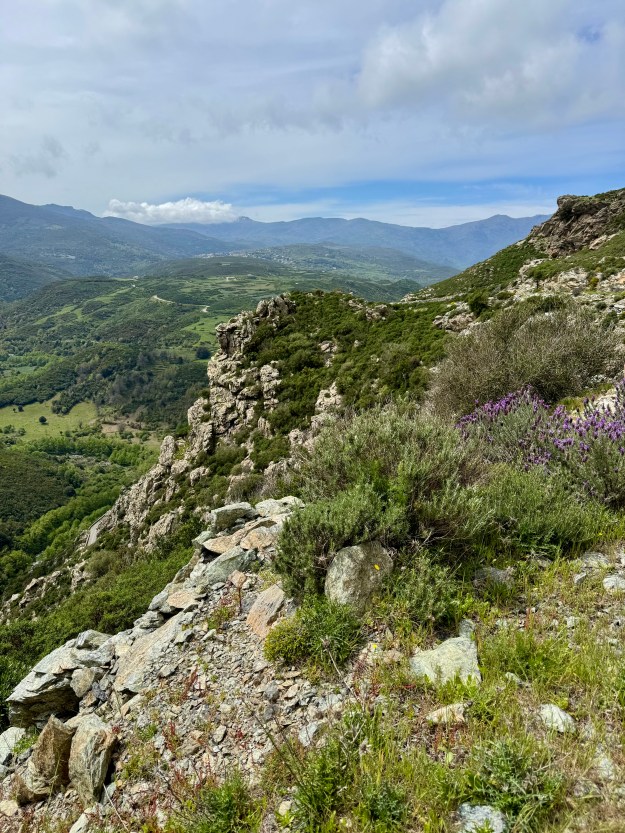
The words that come to mind to describe the landscape are “wild” and “unkempt”. For readers of Daniel da Silva’s Gabriel Allon series, it looks as one imagines from those books. There are indeed rough scratchy bushes of macchia and wild lavender growing everywhere. There are goats roaming around the hills, although only once was our passage along a road stopped by a few crossing the road – and no damage to the car was involved.
The roads are smooth, but other than lines there are no indications of the curves ahead, speed suggestions or mirrors for seeing around hidden bends (of which there are many). The roads hug around the coastline and climb up and down the mountains, some of which are high enough to have still been topped with snow in mid-April.
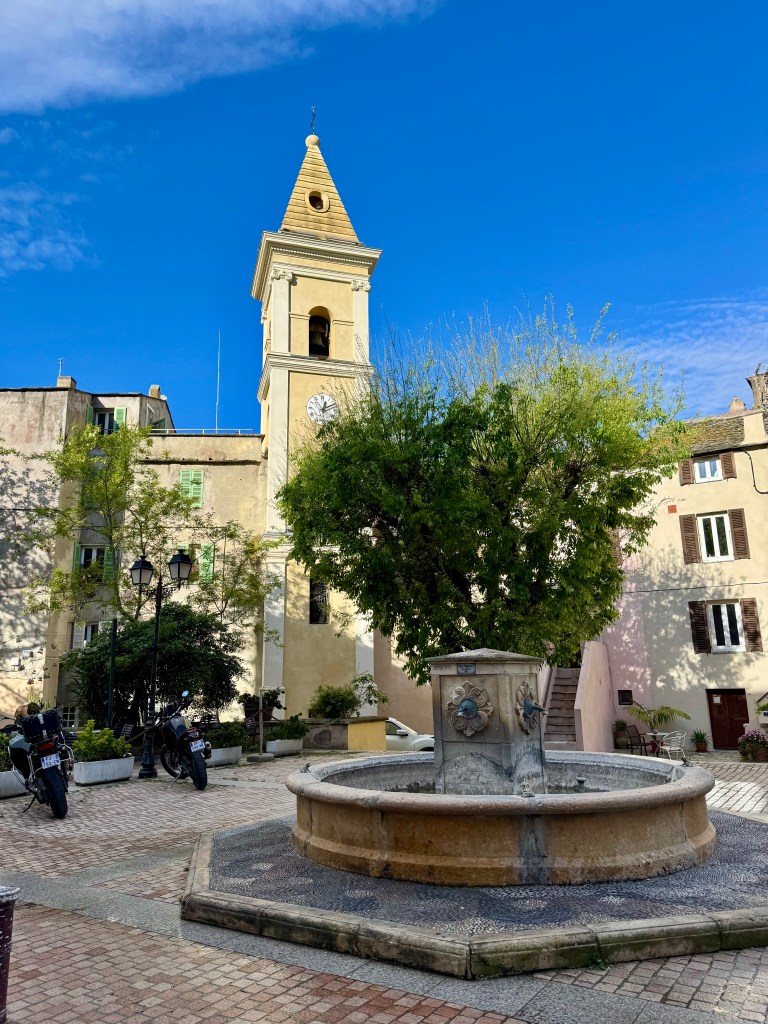
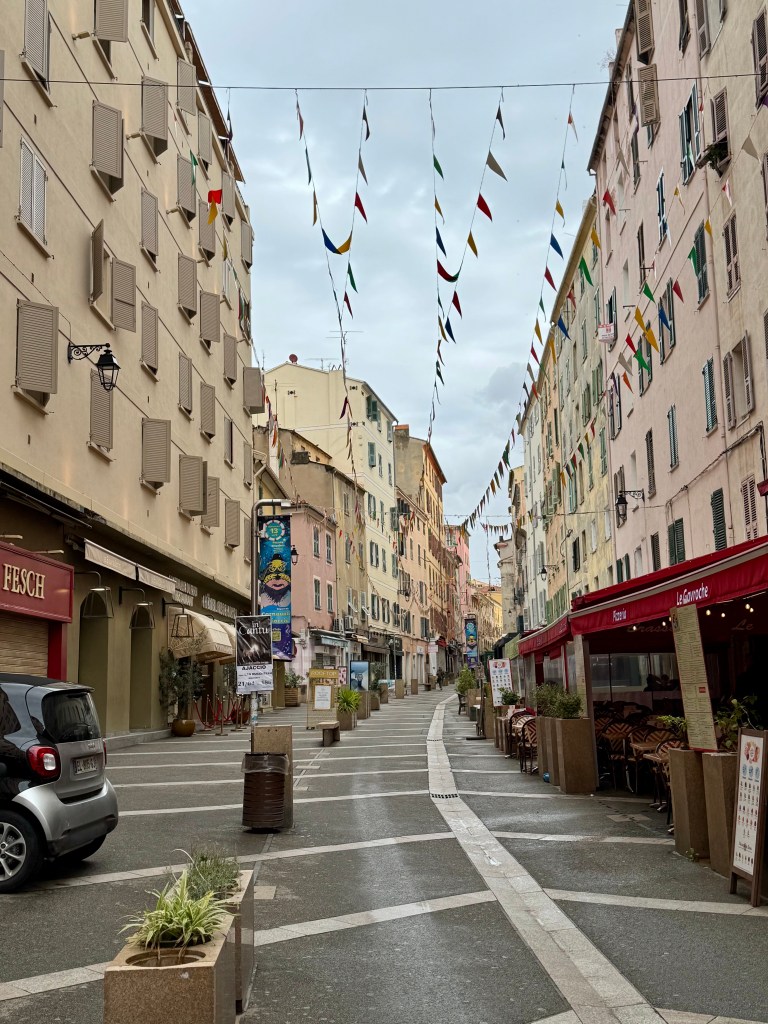
In contrast to the wild landscape, the little villages and towns that pop up every few kilometres along the roads are pristine. Most often, the houses are painted in yellows, orange and pale pinks, reflective of the rocks that line the coastline. There is almost always a church and, other than the capital Ajaccio, the towns look as if they haven’t changed for centuries.
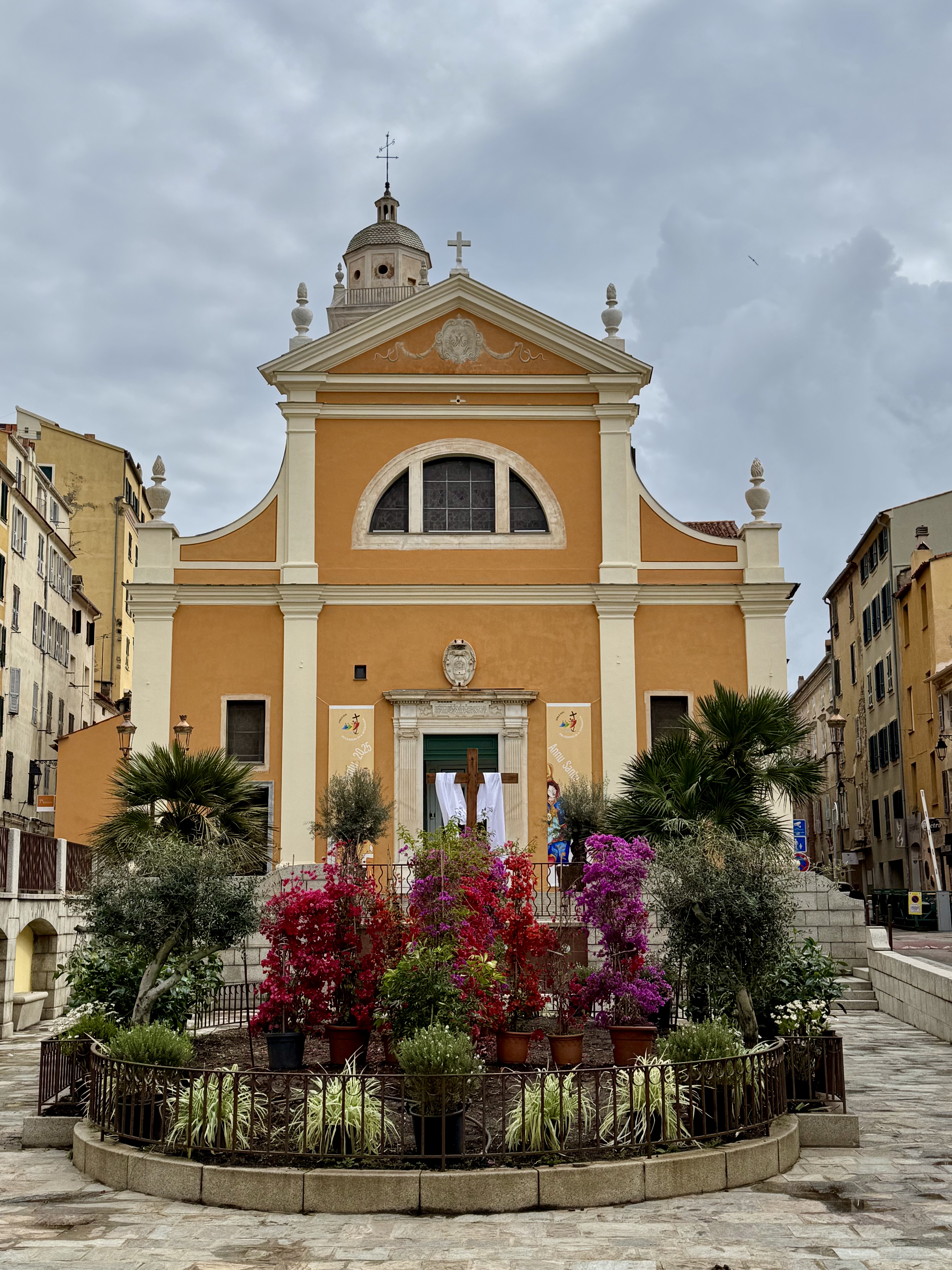
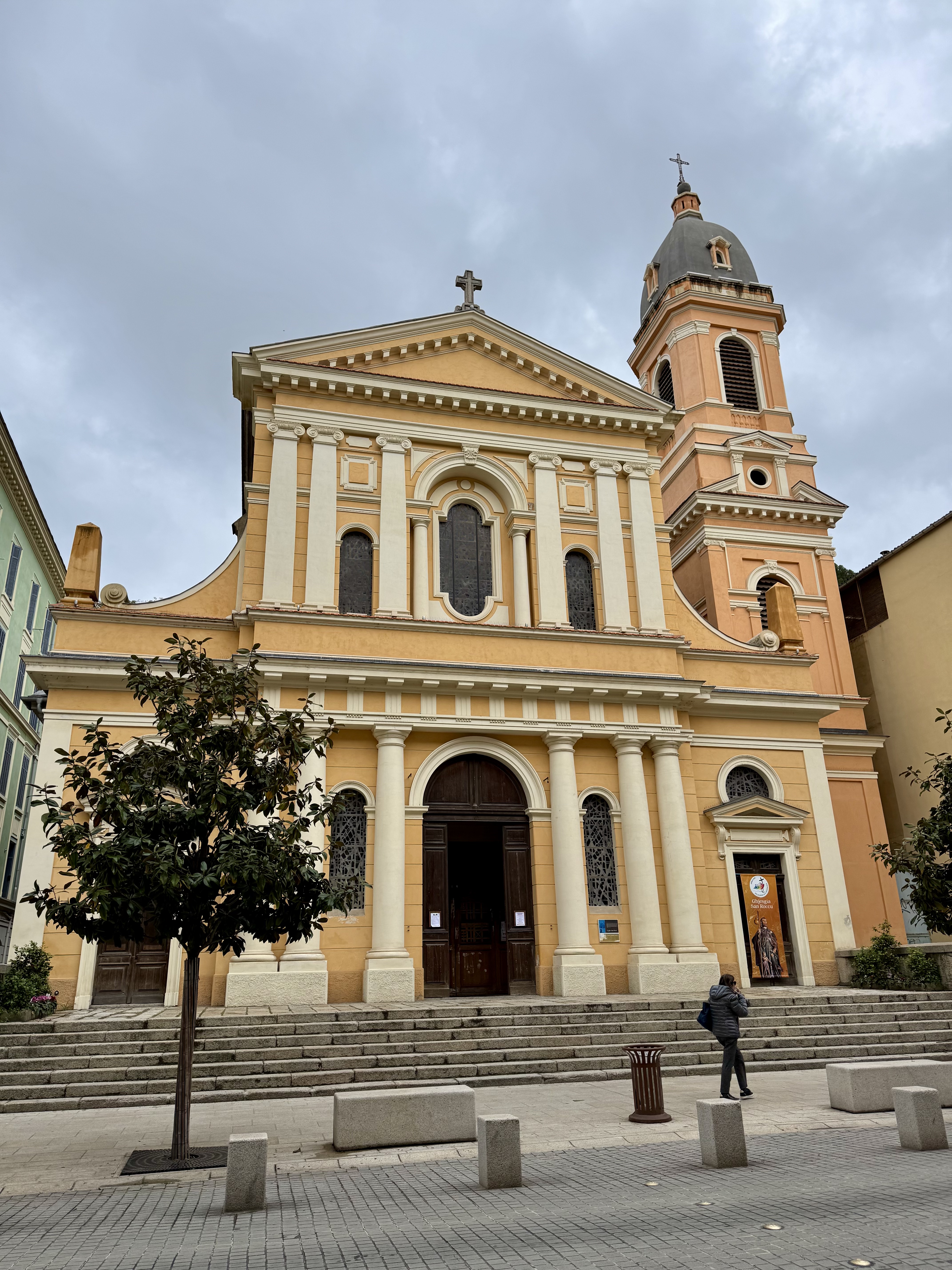
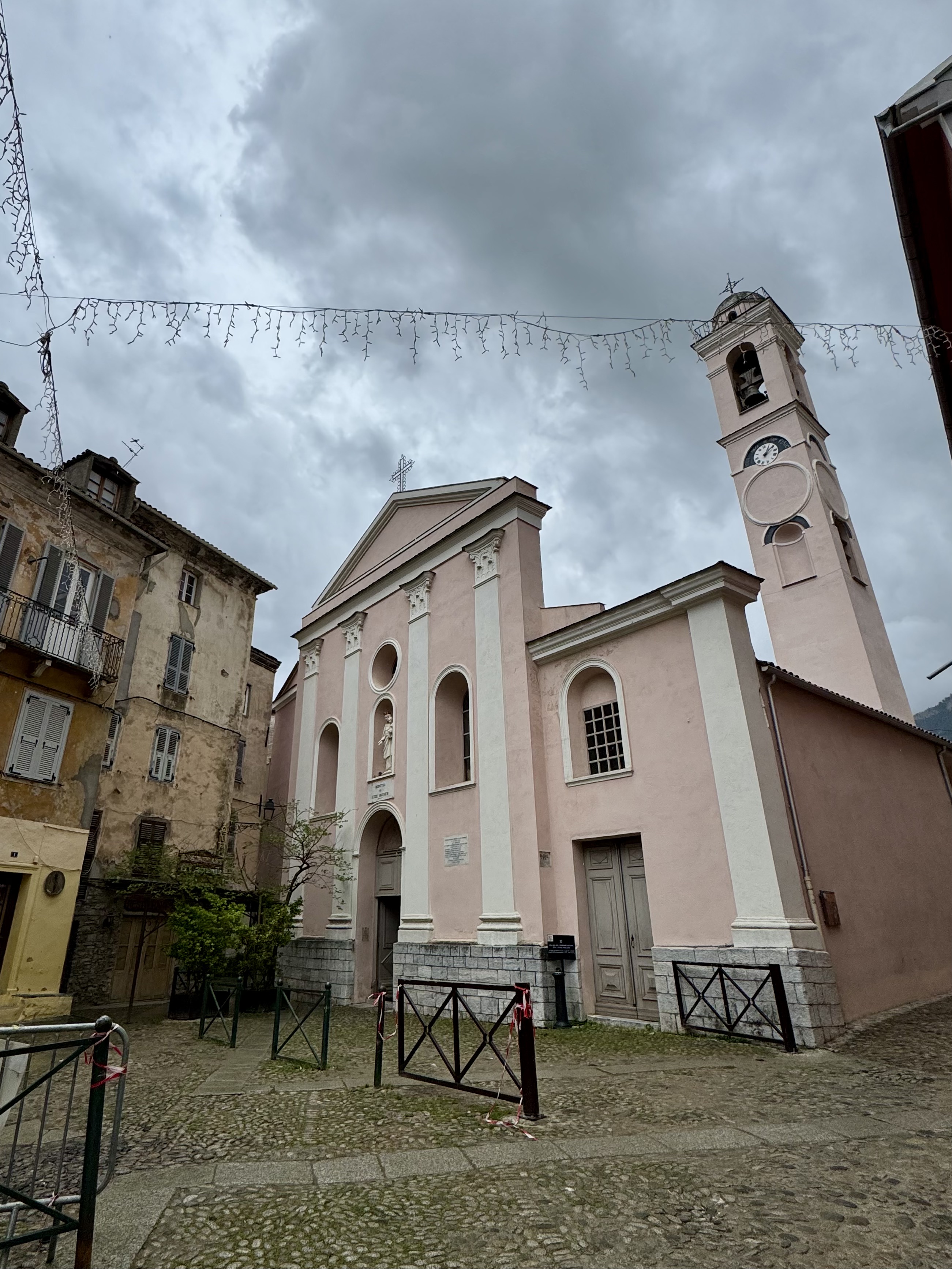
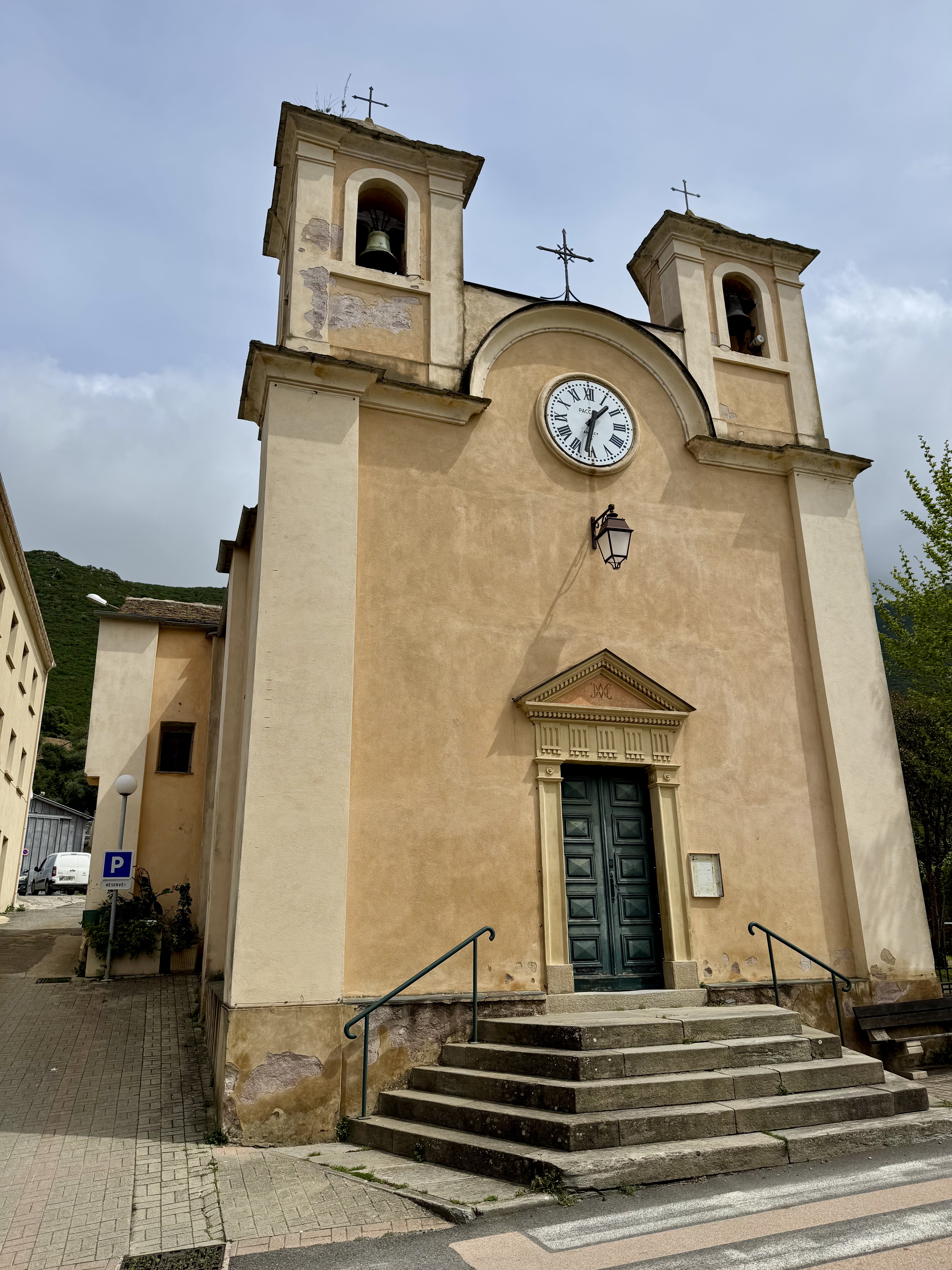
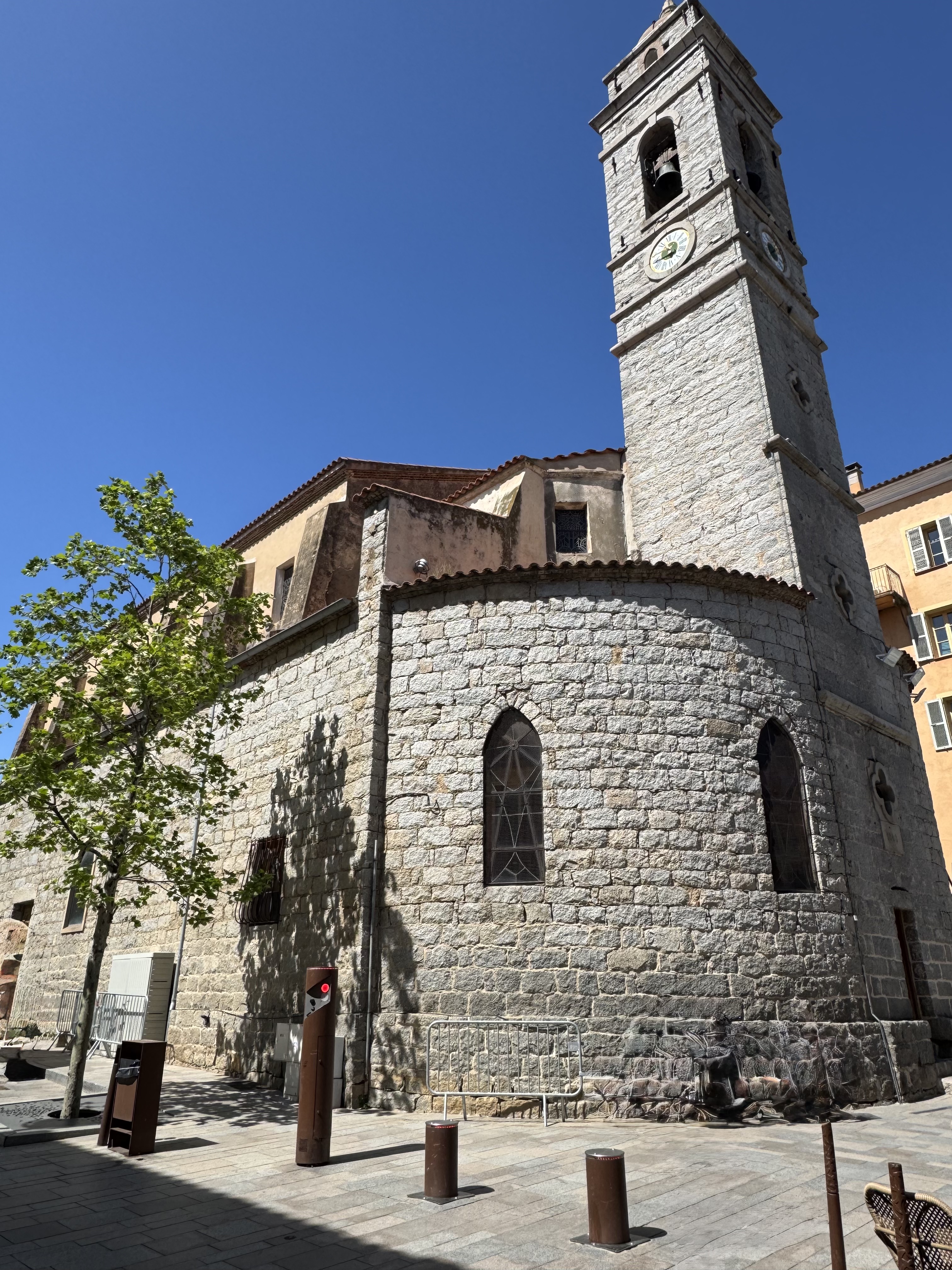
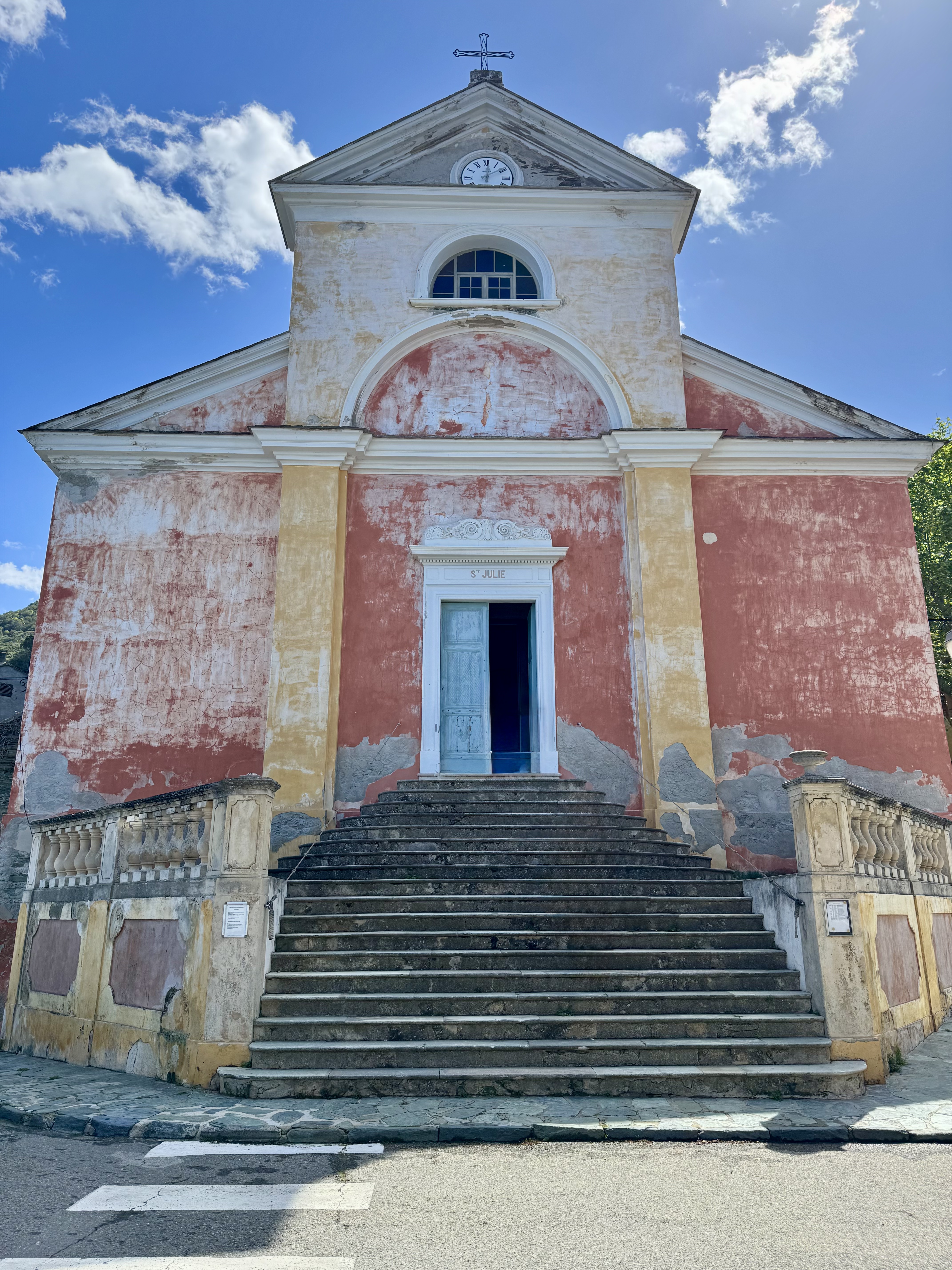
Corsica is part of France but being wedged between the Italian mainland and the Italian island of Sardinia, clearly has Italian influences everywhere. This was most noticeable in the offerings of pizza and pasta at most places. At the same time, Corsica is fiercely proud of its heritage and distinctiveness. The local brocciu cheese is a goats cheese with a strong flavour, often cooked with spinach in cannelloni or melted between aubergine slices or in an omelette. While there is not much water or agriculture, the tamed land we saw was often dedicated to grapevines and we can attest to the agreeableness of Corsican wines.
When it came to coffee and breakfast, the French influence was clearly visible, with a Corsican twist. Our preferred coffee quickly became a “noisette” – an espresso topped up with warm milk (slightly more than a macchiato and less than a piccolo latte)[1]. While the perfect balance of coffee and milk, it was also at least one third of the cost of a cappuccino – clearly not a preferred drink in Corsica! Breakfast was generally a noisette and a pastry – plain croissant for me, pain au chocolate for my husband and the “sherpa”[2] varied his choice depending on his mood. Not every boulangerie, selling bread and pastries sold coffee though, so we sometimes had to breakfast hop.
Possibly our favourite breakfast experience was in a little town between Figari and Porto-Vecchio where the boulangerie was next door to the local café (afterwards we realised they were connected). As all the tables in the sun were taken, we perched on a wall with our coffees and pastries. In no time at all, horrified that we might be uncomfortable, the proprietors were bringing us a table and chairs from inside and placing it in a sunny spot for us to enjoy our breakfast in a more genteel way.
Overall, we found the Corsicans to be friendly and welcoming to tourists. While I would address them in French, I would then talk to my husban in English and the staff would immediately swap into English for him to be able to understand – quite different to the Parisians! Contrary to advice we were given before we arrived, we did not find it to be expensive and not at all difficult to manage to get things done.
Some of the highlights of the places we stayed or visited include:
Saint Florent
We drove from Bastia where the ferry landed, straight over the mountains to our first stop, Saint Florent. Driving in the dark was tricky and we were thankful for the AI in the car’s lights that swapped from high to low beam of its own accord.
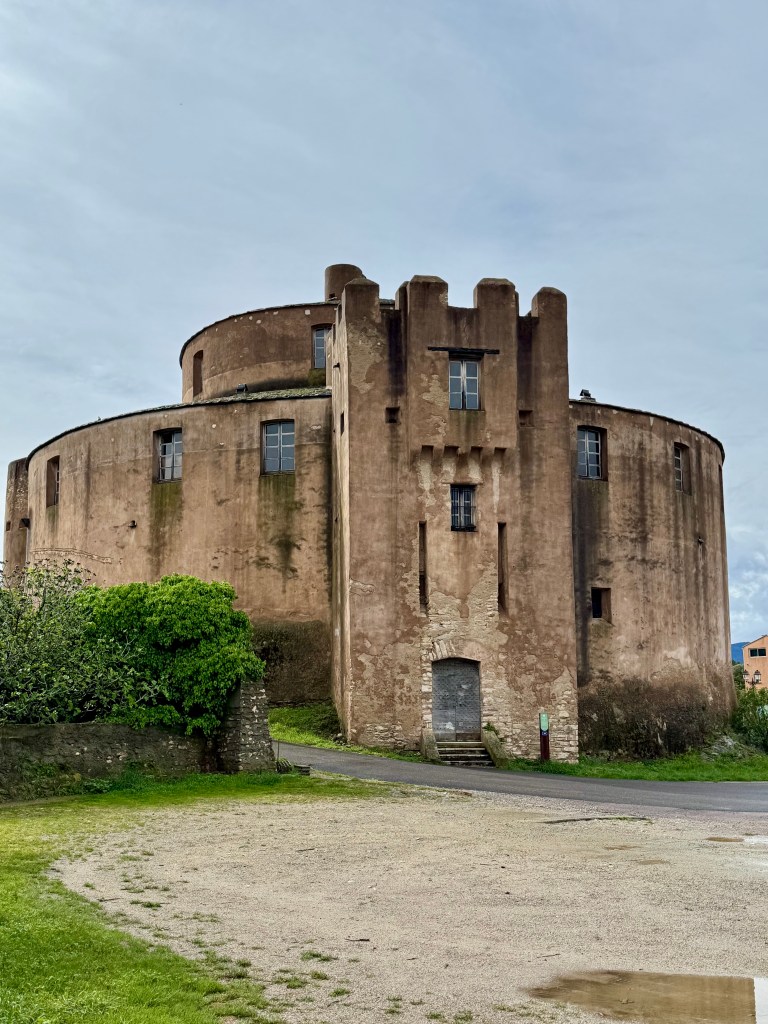
Saint Florent is a coastal town, with a citadel (lots of these in Corsica). Like many European towns, it is centred around a main street and a small town square, where the church is also located. With lots of small villages in the surrounding hills, it seems that everyone keeps a boat in Saint Florent as there were hundreds of boats moored in the marina.
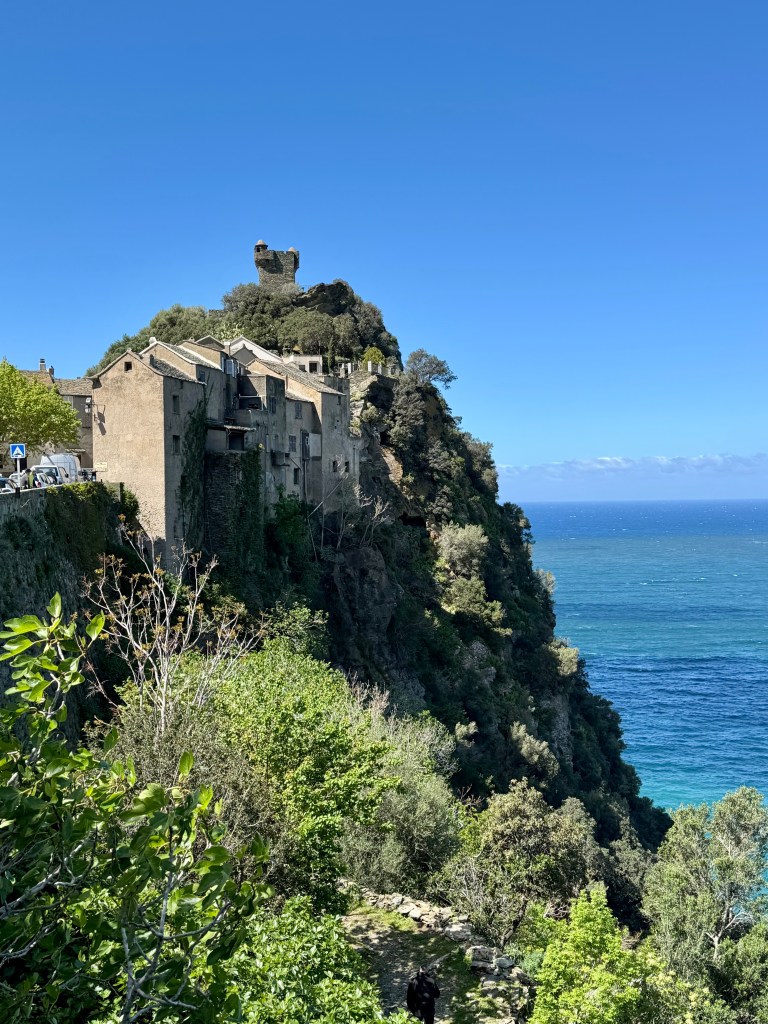
The surrounding hills are also locations for great hikes. We did one above Olmetta di Tuda with gorgeous views, although the 40km/h winds kept the temperature a little chillier than we had expected. We also drove north of Saint Florent to the tiny village of Nonza. With an ancient tower remaining that looks over the gulf of Saint Florent and a black beach at the bottom of a 100m cliff, the walk down and up was fabulous (even if our initial route was blocked by an unexpected waterfall from the downpour the night before).
Corte
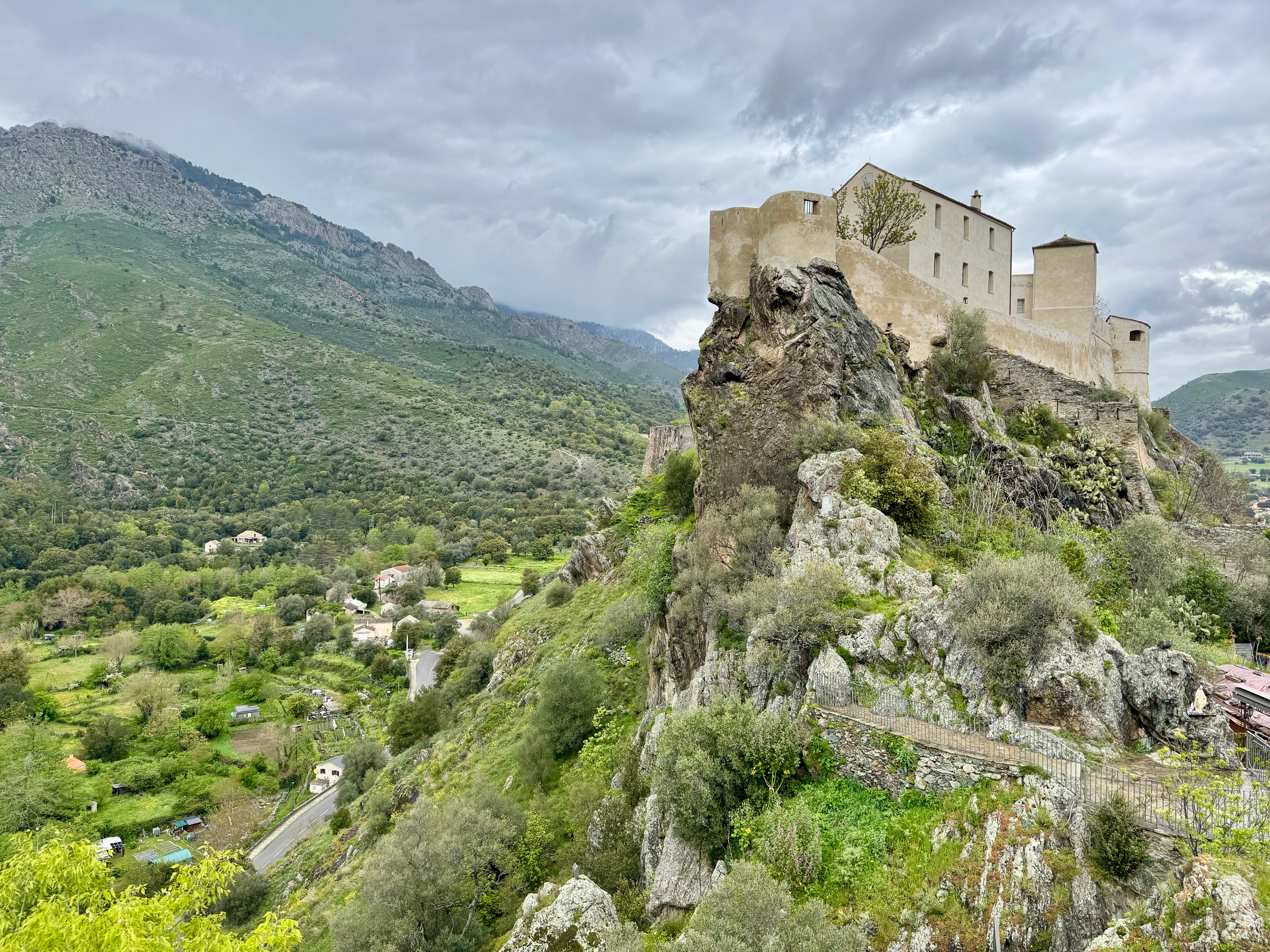
Corte is the old capital of Corsica, almost in the centre of the island. Today, largely a tourist centre the citadel is also on a cliff above the old town, which is above the new town. Unfortunately, the citadel was undergoing renovation so we were not able to walk around it, but we could walk along part of the bastion[3] walls and across to a great spot to view it and the surrounding countryside. It was in Corte that we had a meal where each of the three dishes we ordered was made with brocciu, the local cheese. There were many gorgeous laneways and pastel-coloured buildings throughout the old town.
Ajaccio
From the old capital, we headed to the current capital of Corsica, Ajaccio, the biggest city in Corsica and home to 75,000 (the population of Corsica is about 360,000). This is a city, but we were just a ten-minute walk into the old town, which is the birthplace of Napoleon and where his family came from. Napoleon’s uncle accumulated the biggest collection of artworks outside Paris, which is located here. One can visit Napoleon’s birthplace, now a museum, and see the major statue of him at Place d’Austerlitz, that lists all of his achievements. Also a port city, Ajaccio has a modern port and marina as well as a citadel and old garrison overlooking the bay.
At the end of the city of Ajaccio are the Isles de Sanguinaires, or Bloody Islands. We hiked out to the peninsula and could see the sandstone islands dotted further along the coast. They are so-called because when the sun sets, the sandstone rocks sandstone glow red.
Propriano
The sun came out and the temperature rose a little as we headed out of Ajaccio, allowing us to take the coastal road south towards Propriano and enjoy some of the sandy beaches there. Propriano itself was pretty much a one street town with a marina and port. We did enjoy some local crepes in an outdoor courtyard for lunch.
Sartène
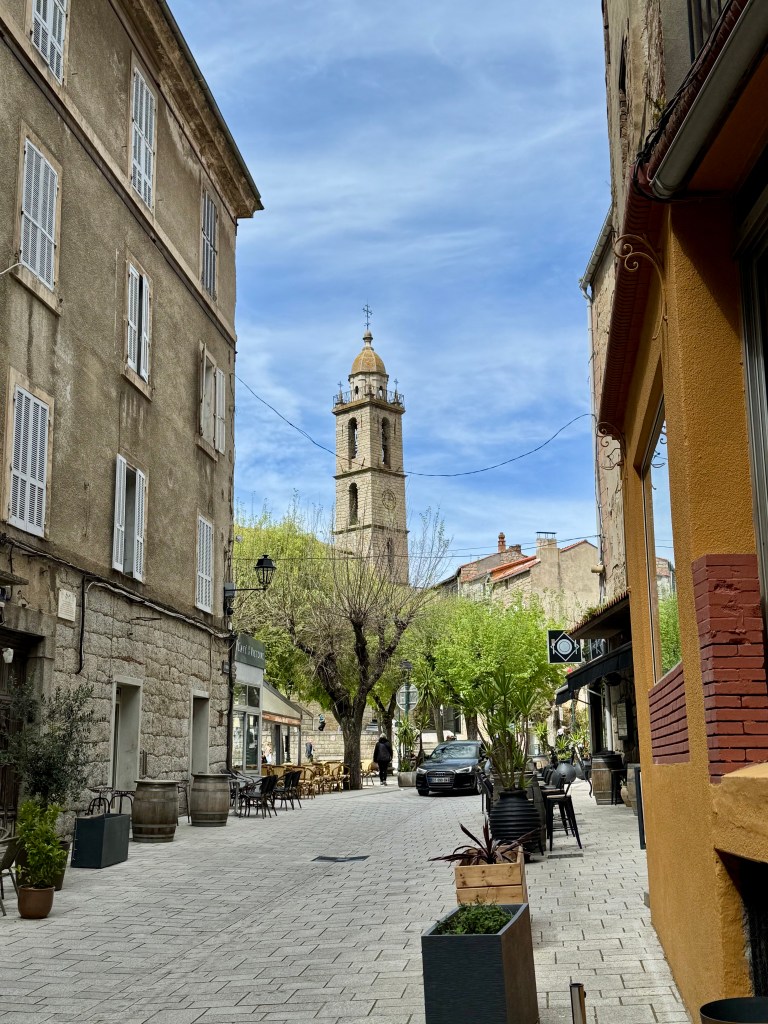
Sartène was definitely the highlight of the day, with centuries’ old buildings of granite stones in narrow alleyways and balconies with flowerpots. While the town square was lovely and surrounded by cafes (and the church of course), we had a coffee and delicious pastries at a little café off the main square. We climbed up and down the stairs, wandering through alleyways that in places were only one metre wide. From the top of the hill on which Sartène is built, we had lovely views of villages dotted along the surrounding hills. The views along the coast from Sartène down to Figari were beautiful.
Porto-Vecchio
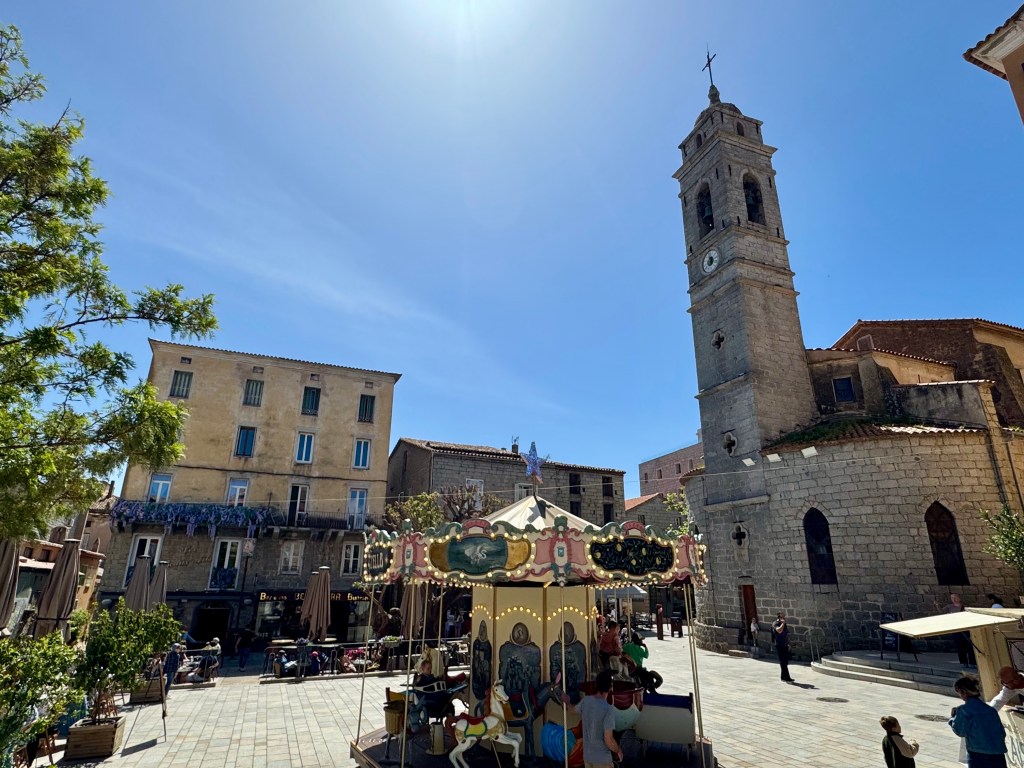
We only overnighted near Figari so the “sherpa” could get on his early flight to Paris. We headed off towards Porto-Vecchio, stopping for breakfast with the very hospitable pâtissier mentioned above. Porto-Vecchio was another delightful town with a citadel – this one having converted its main remaining room to an exhibition space detailing information about the region. This was another cute town with pastel-coloured houses along narrow streets and an inviting town square with the ubiquitous church, cafes and this time a carousel as well. We love the gates built into the old city walls – they have such character.
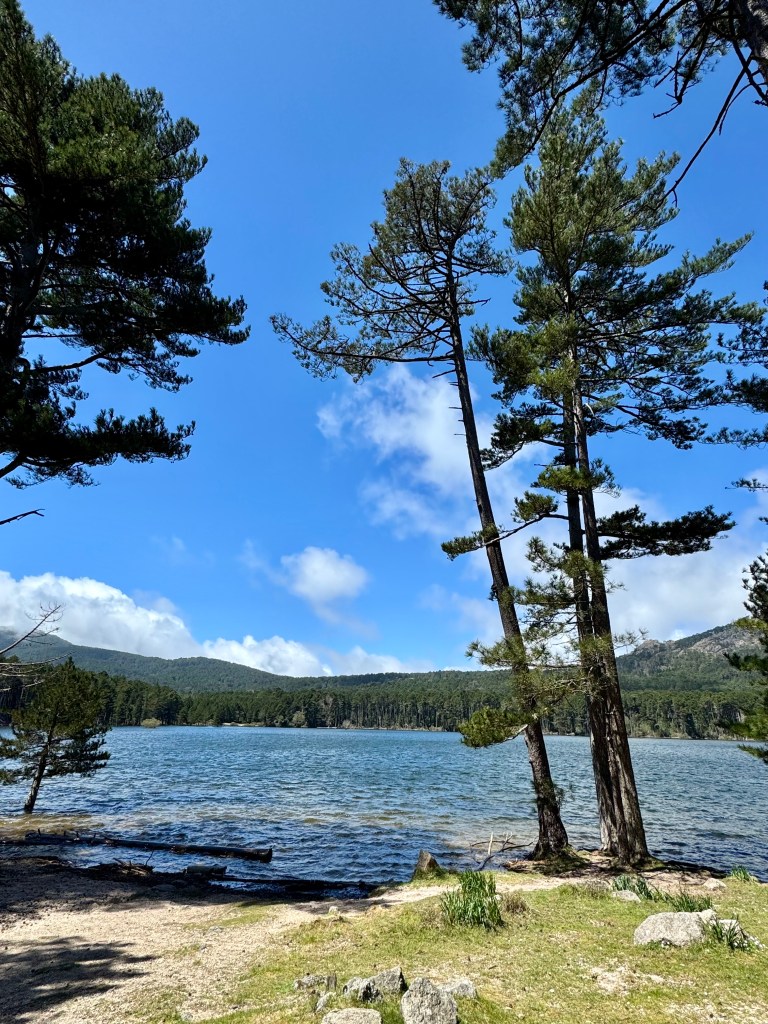
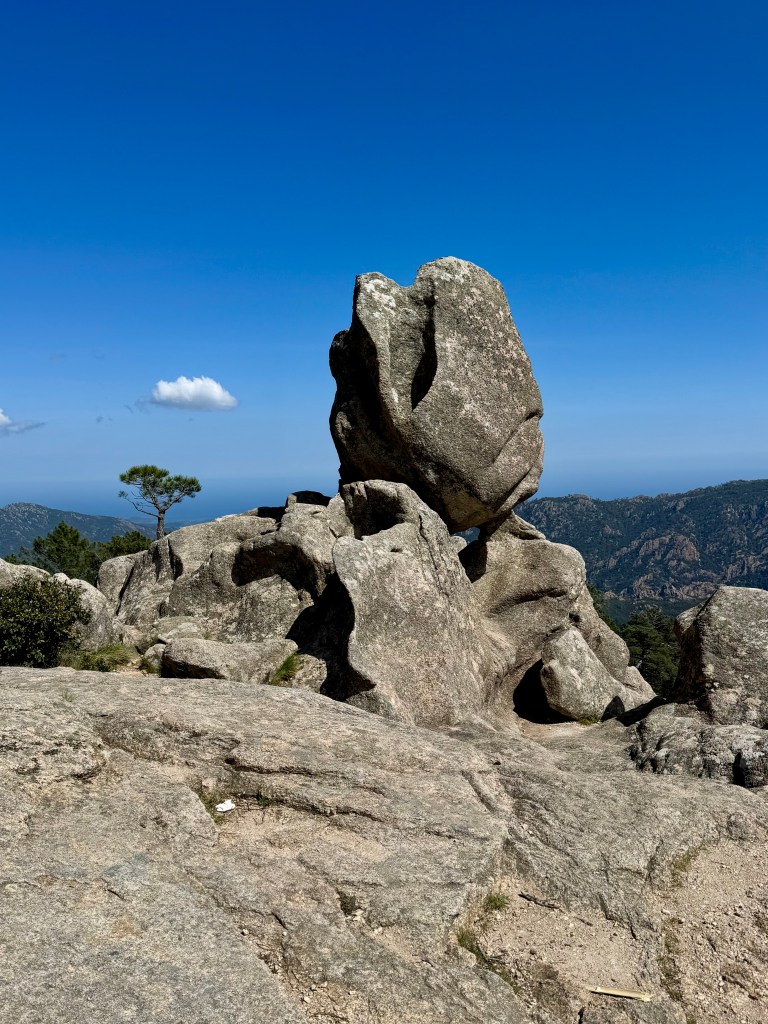
From Porto-Vecchio one can climb up the mountains. In our case we drove up the Col dd Bavella, a stretch of road that was also a section of the 2017 Tour de France. Needless to say, we were glad to be in the car and not on the bikes. It seemed to get steeper the further we drove, but the views back down the valley and to the coast were jaw dropping. We stopped to walk around a lake used for water storage, looking very much like an alpine (read “cold”) lake. Further on we decided to look at one of the famous waterfalls – Cascade de Piscia di Ghjaddu. The walk was longer and harder than we expected, and not sure I’d recommend it, although for those who were abseiling down the cliff next to the waterfall it was obviously a desirable stop and the rock formations we saw along the way were very impressive.
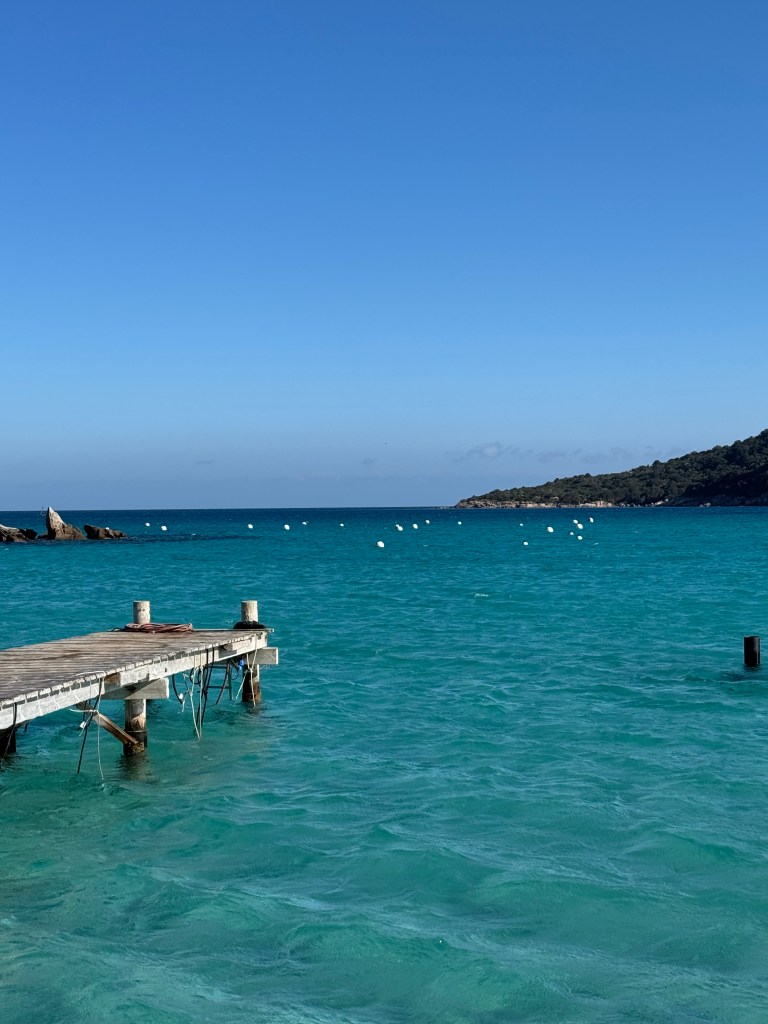
What was worth a stop afterwards was the beach of Santa Giulia with stunning clear waters in a pretty bay.
Bonifacio
Our last stop and possibly our favourite town was Bonifacio, a bastion and citadel built almost impossibly at the top of 80m sandstone cliffs. Founded in 980AD by Count Bonifacio of Pisa, it was almost impregnable until the 1500’s, despite the King of Aragon holding the city under siege in 1480. The town itself is gorgeous, as are the views from the top looking along the coastline and back to the countryside behind. We walked down (and up) the 189 steps to a path along the sea, in the cliff. Contrary to legend that the staircase was built by the King of Aragon’s army in a night, it was part of a natural rift in the rocks for centuries beforehand and made into a staircase in a matter of months in the late 1400’s. The citadel was also most impressive, with underground storage rooms and a cistern capable of holding 190,000 litres of water.
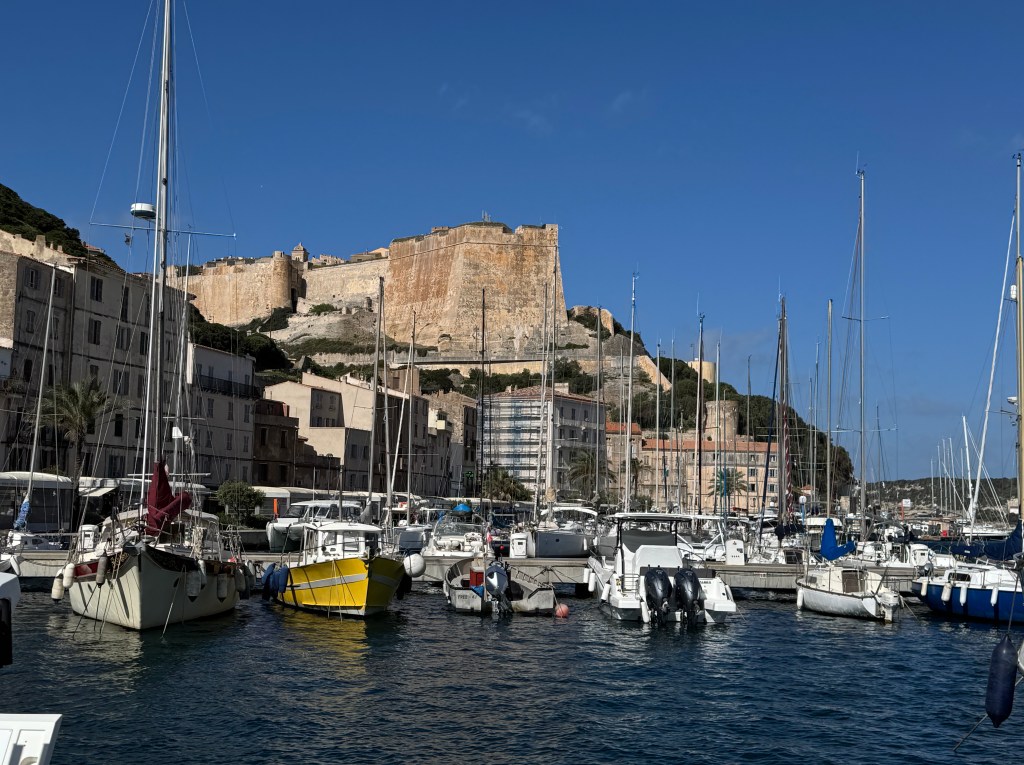
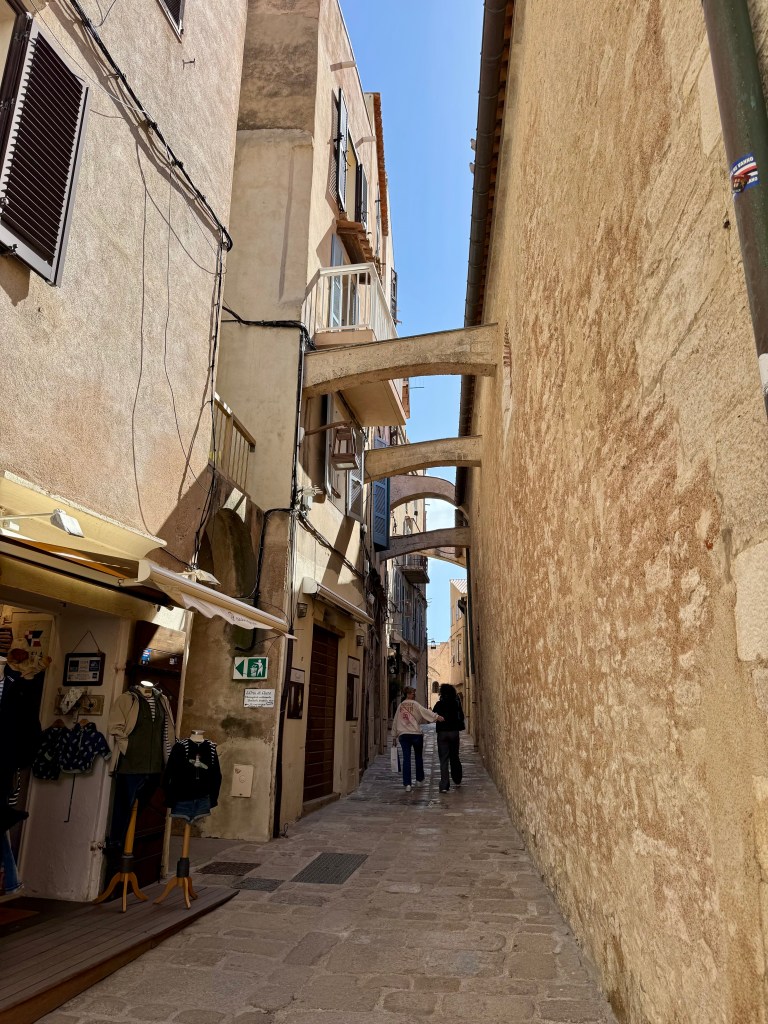
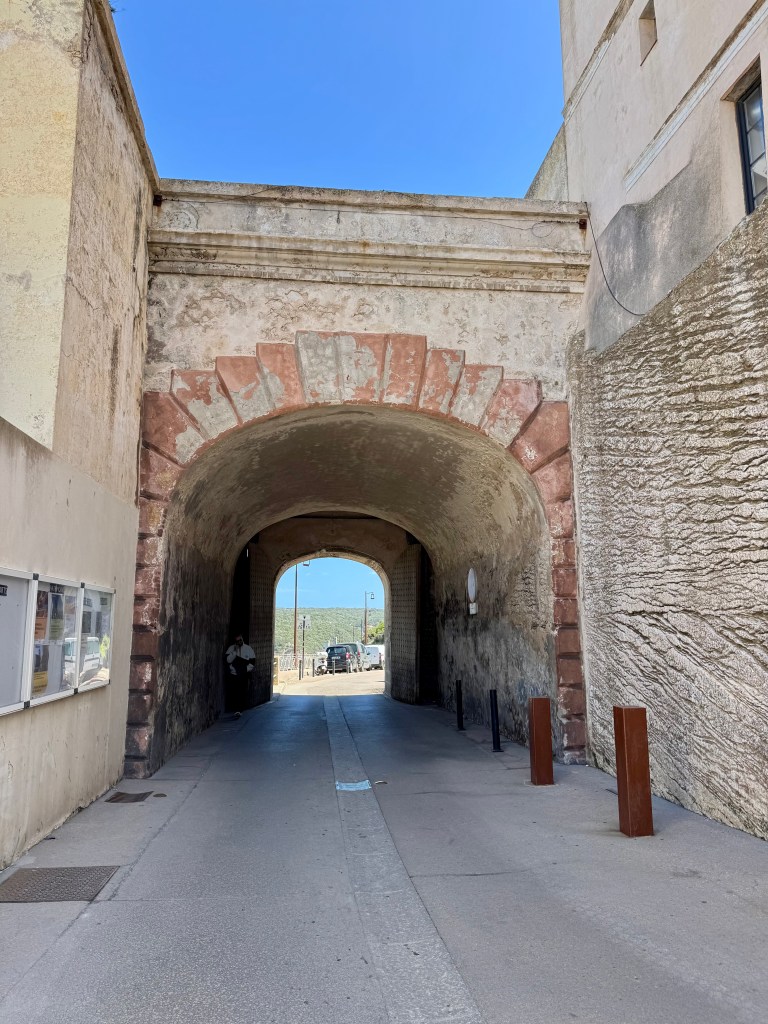
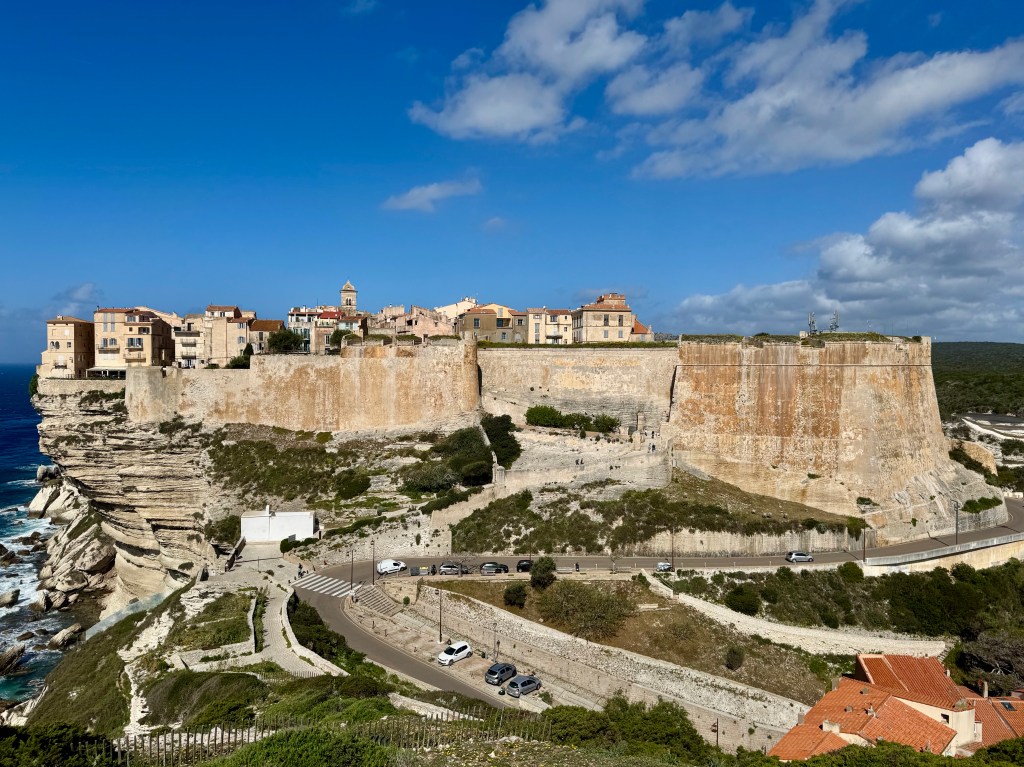
We had a delightful lunch at the base of the citadel in one of the many local restaurants with super friendly staff. The next day we walked on a path along the clifftop where even today there is a military watchtower – the modern equivalent of the citadel. It was even further to the lighthouse at the edge the peninsula, which seems to be a popular walk, for those with enough time.
All the carparks for the old town of Bonifacio are located at the foot of the cliffs, by the marina, which is also where many restaurants and bars are located. We stayed a little out of town but parked below and had dinner by the marina as well as walking up and down to the citadel during the day. There was no doubt in our minds that in summer the marina would be heaving with visiting yachts and boats.
[1] This is posted in my 1000coffees blog, so the details about coffee need to be included. Apologies if you are not a coffee drinker 😉
[2] Our youngest son joined us for the first 6 days in Corsica, a delightful opportunity to spend some time with him when he wasn’t madly studying for advanced maths exams.
[3] We learned in Corsica that a bastion is a wall built against the natural land, giving it further strength and support against attack, particularly from cannonballs.
 1000 coffees