Yesterday we hit the halfway mark in our trip. For those not aware of our plans or planning, we will be travelling for six months. It is a wonderful experience, but not without its challenges for such a long period. We had planned the first nine weeks and after that were going to “work it out on the road”. Our first big picture plan had to be adjusted when we learned we were not allowed to take our car into the Balkans. After a day or two trying to find ways around it, we modified our plans. We usually plan about a month ahead, but slowly. This allows us to change our minds on where we should stay, based on the recommendations of friendly waiters….true story!
We spent last evening reflecting on the things we have learned on our trip so far…..
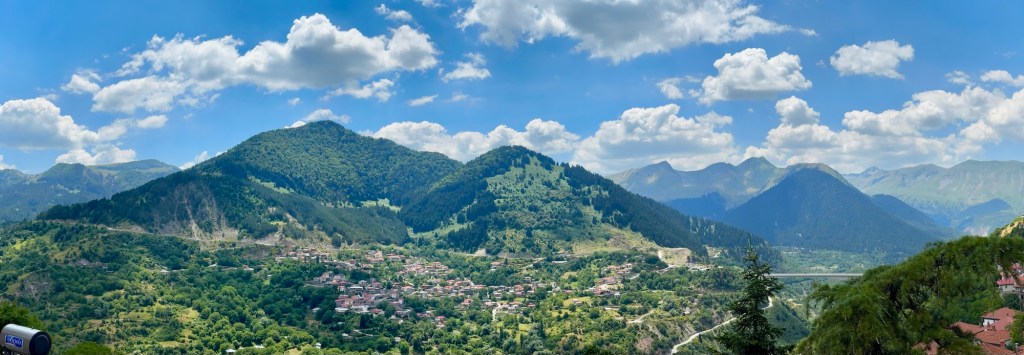
- Having time provides us with a great opportunity to explore places that are off the usual beaten track and perhaps less well-known. As I write this, we are almost at the end of eight days in the northwest pocket of Greece, high in the mountains. This is an area packed with ancient stone villages, beautiful lakes, steep mountains and gorges. Some of the scenery looks like we could be in any of the mountain villages of Europe, although constant presence of Greek food does remind us where we are. It is not the easiest place to travel to but it has been a wonderful place to visit – with interesting history, beautiful scenery and warm hospitality. This is a different way to travel compared to squeezing a trip into a couple of weeks and we feel very privileged to be able to do it this way.
- Moving every few days is exhausting. We packed the first couple of months with continuous moving from place to place. Two or three nights in an Airbnb is too short on a consistent basis. We arrive in the afternoon and spend the first afternoon working out our new environment, the second day looking around and then we are off again. We have since slowed down the pace, staying for five nights at Airbnbs, and if we stay somewhere for a shorter period, we have booked hotels. We have also repacked, so we don’t have to access all our bags when we stay in hotels (it’s pretty difficult to travel superlight for a six-month period).
- The first day at a new Airbnb or village is the hardest. Not without me having had a couple of “moments”, we now know that when we first arrive it is not always as we expected it to be. It might be that we didn’t think about the location well enough, that some things don’t work the way we expect, or just that we may be tired from the travelling to get there. It is usually better by the second day, and we have learned to adapt and find ways to make everywhere work for us.
- On that note, interpreting Airbnb descriptions (or the absence of a description) is an acquired skill. We look for “fully equipped kitchen” in the comments, air-conditioning throughout, how far it is from where you want to be (or not too close to where you don’t want to be). We check the photos to see what the kitchen is like, is there a couch and, in Italy, is it not right next to the kitchen table. Even then, one can’t always be sure that the three-bedroom, two-bathroom place doesn’t mean that one of the bathrooms is out the back and one must go outside to access it!
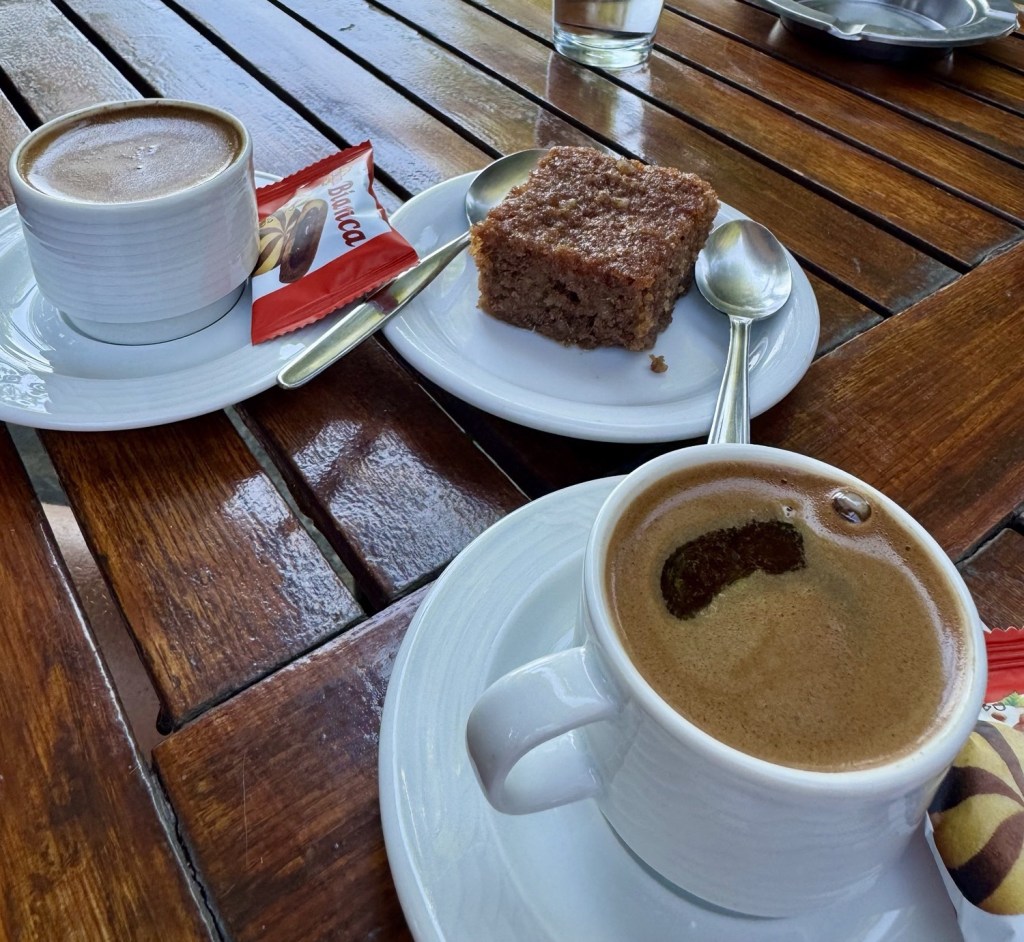
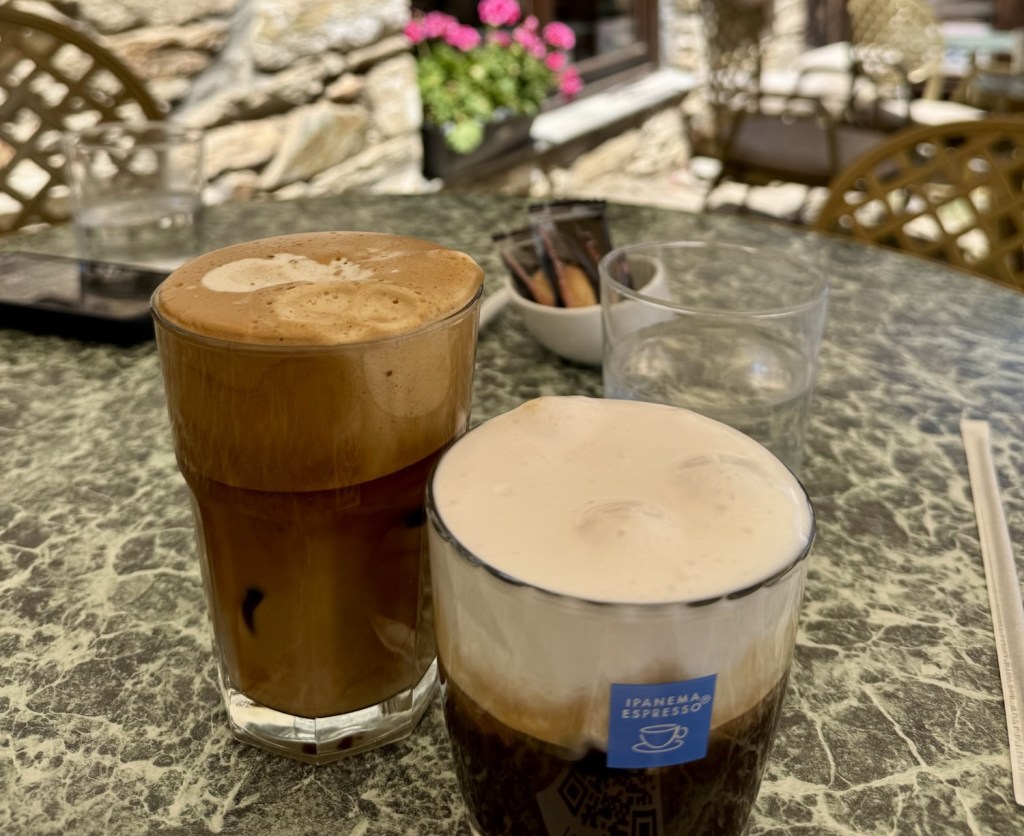
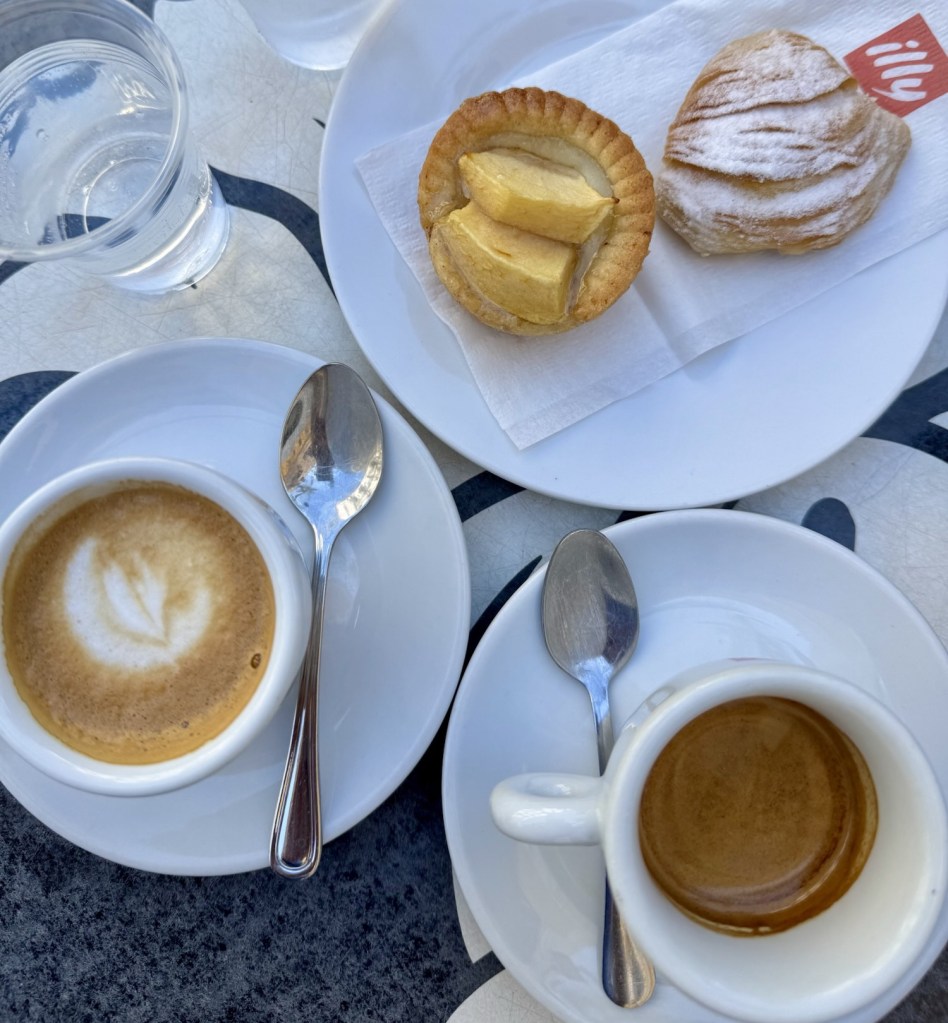
- Coffee: A “piccolo latte” in Sardinia is a “noisette”. Italian espressos are very short and cheap, a double espresso costs double and a cappuccino at least three times the cost of an espresso. Greek coffee needs a little sugar, and freddo cappuccinos are fabulous, but need stirring before drinking. Coffees in Greece always come with a complimentary biscuit or piece of cake. In both Italy and Greece, coffee comes with a glass of water – perhaps to balance the effect?
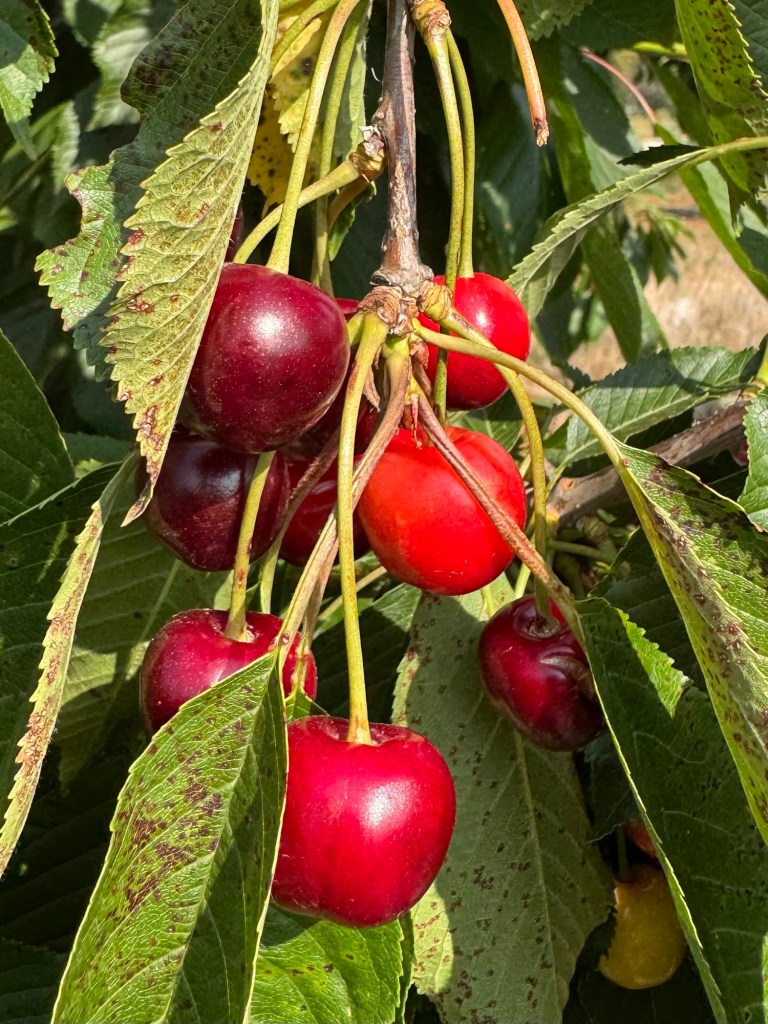
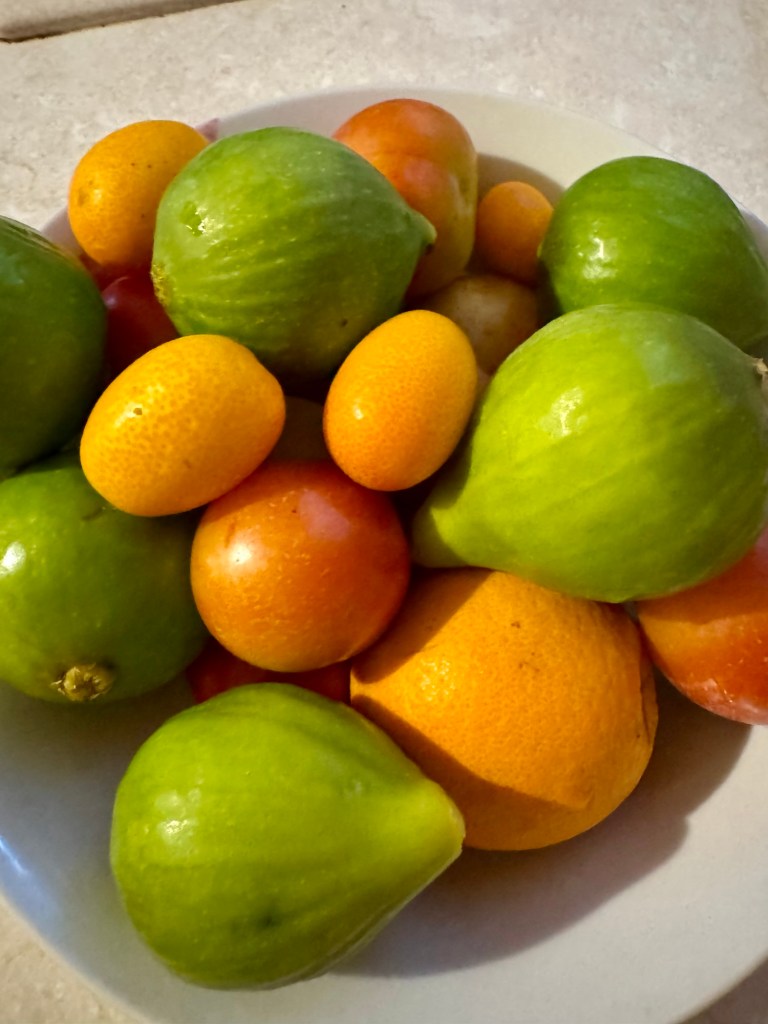
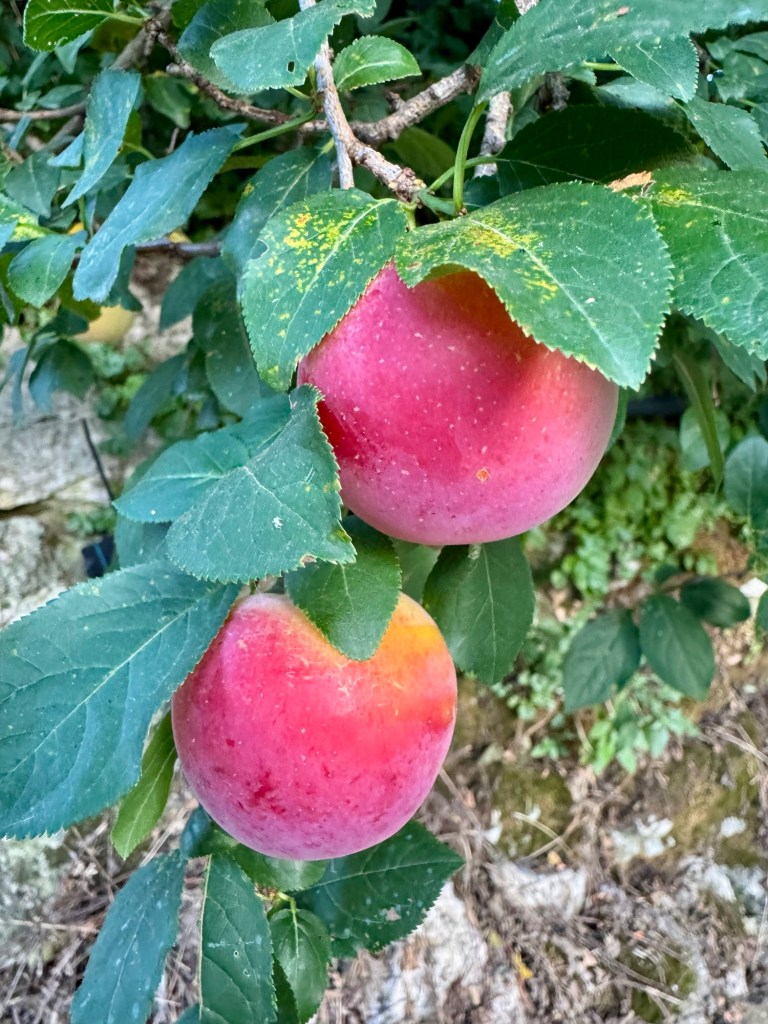
- There is nothing quite like eating fresh fruit, picked off the tree – cherries, figs, kumquats, plums, apricots, oranges, mulberries and red currants have all been sampled. Fresh potatoes, cooked straight after being pulled out of the ground bring a whole new respect for the starchy tuber. And the other local vegetables such as tomatoes, peppers (pointy capsicum), eggplant, onions and garlic sold by the local truck that pulls up on the side of the road, taste magnificent. These fresh fruit and vegetables make dreaming up recipes an easy delight.
- The European siesta now makes perfect sense. It may have been colder for longer than we expected but summer then started with a bang! By about 2pm it is far too hot to be outdoors. We head inside for a late lunch and then stay inside in air-conditioning until about 7pm when it starts to cool slightly. It is bright until close to 9pm when we realise it might be time to think about dinner. I still haven’t learned to sleep well on a full stomach when we finish dinner after 10.30pm.
- Food/meals we have discovered we love –
- Baked feta
- Galaktoboureko (Greek custard pie)
- Sfogliatelle (a pocket of filo pastry best filled with ricotta) – but only on the day they are made
- Tropean onions – long sweet red onions, amazing cooked with spaghetti or in onion tart, but lovely raw as well
- Greek Orange cake
- There is nothing that extra virgin olive oil doesn’t make better
- Bruschetta with fresh plum tomatoes, basil and EVOO
- Negroamaro – the red wine grape of Puglia
- Limoncello Spritz (for Dina anyway)
- Navigating Italian petrol stations requires patience and a preparedness to accept that what worked at the last place is not likely to work at this place. Having realised that self-serve prices are significantly lower than the serviced pumps, one must make sure to drive next to the correct pump. Then one must understand that if you can get the machine to accept your credit or debit card (not always the case for no apparent reason), it will charge the card €105 no matter how much the petrol costs! I had to have it explained by the lady at the counter (in Italian) that tomorrow I would be charged the amount the petrol costs and then credited the €105. Phew! At the machine, one version asks you to select the pump first and then give your card, another wants the card first and then select the pump. No surprises that not all the machines have an English translation, so I almost paid for someone else’s petrol at one point. Luckily, the kind man realised I was a flailing tourist and cancelled the transaction for me. In retrospect, it made the issue of trying to pay for petrol in Israel with a non-Israeli card not quite as traumatic. Thankfully in Greece we are back to being served at the bowser for the same price and paying the cashier.
- It is wonderful to not have to set the alarm for 5am, to not have to jump out of bed when one does eventually wake up and quite a shock to the system to have to set the alarm occasionally for an early hike.
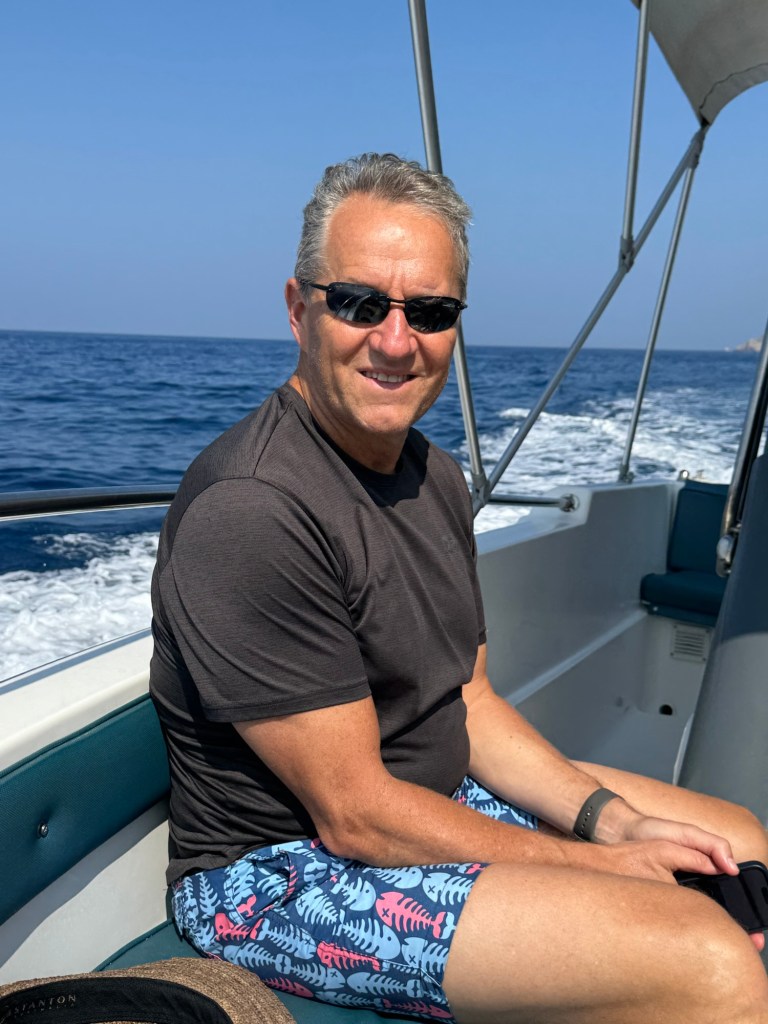
- Perhaps partially because of the pace mentioned in my first point, it took ten weeks for Kevin to stand in the clear water at the beach in Corfu beneath cloudless bright blue skies, turn to me with a smile and say, “it beats working”. He hasn’t changed his mind yet. 😊
 1000 coffees